
-
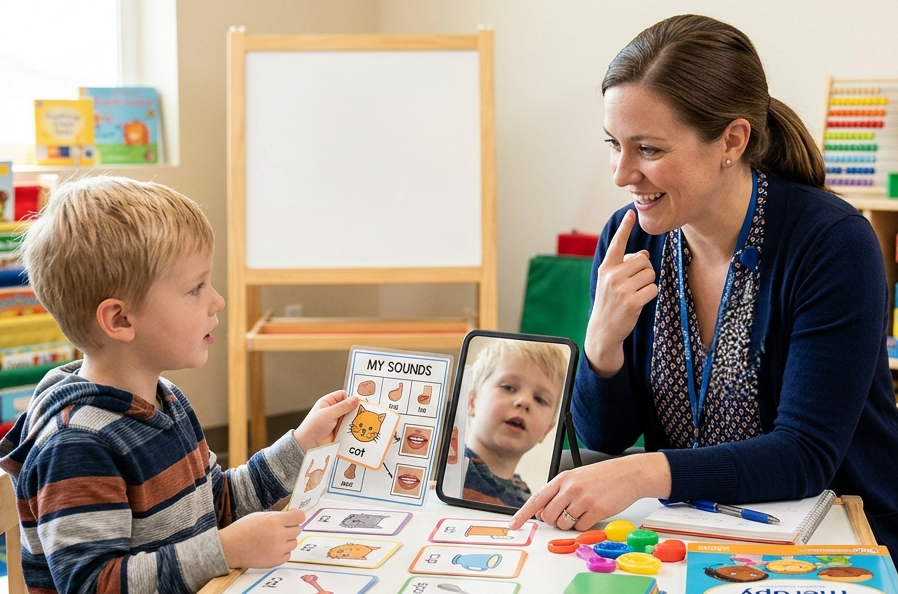
Articulation
Does your child struggle to be understood by family, teachers, or peers? Do they substitute one sound for another (like saying "wabbit" instead of "rabbit") or leave sounds out entirely?
We specialize in articulation therapy—a targeted, playful, and evidence-based approach designed to help children learn how to produce speech sounds correctly and clearly.
-
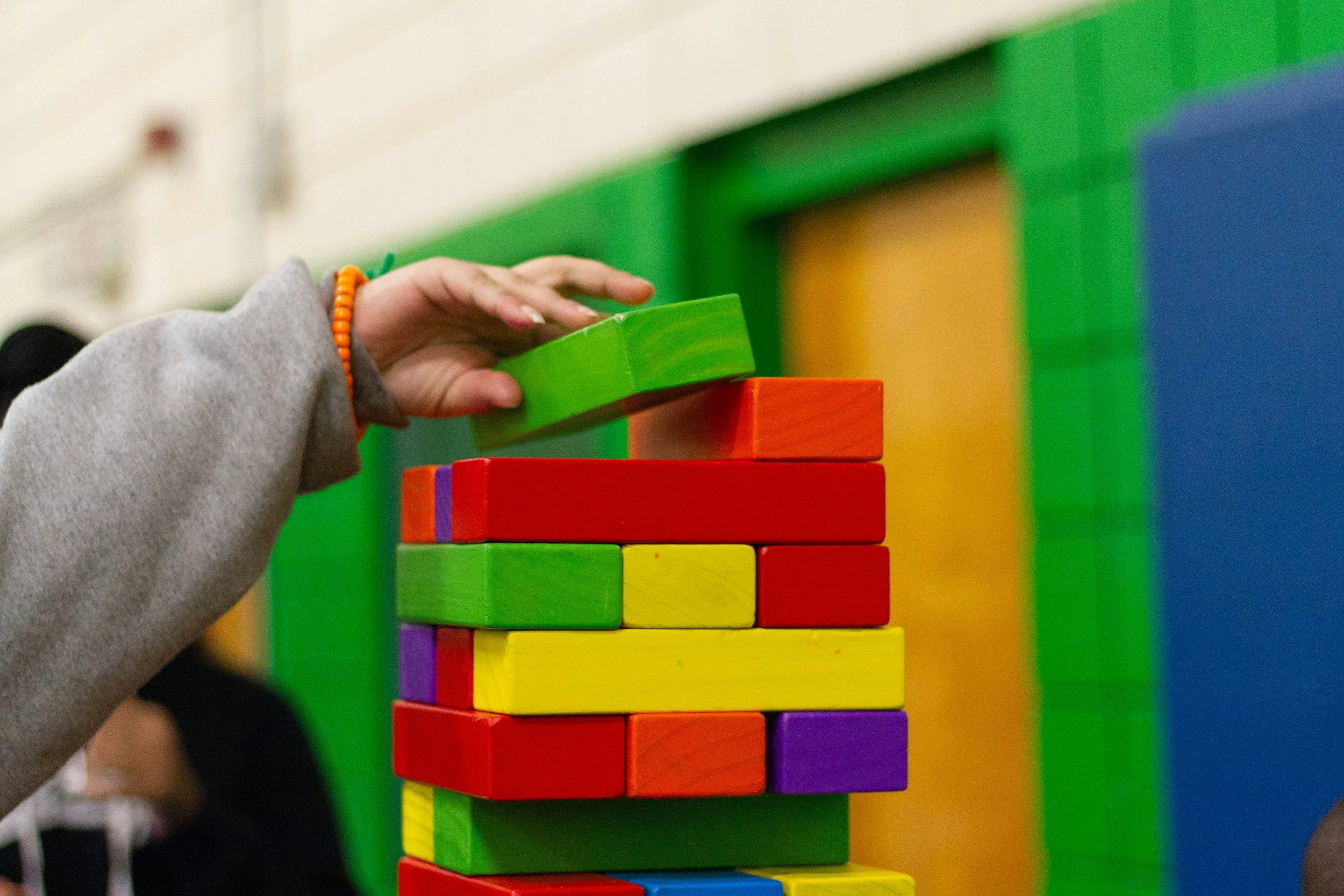
Receptive and Expressive Language
While articulation is about how we say words, language is all about how we understand, use, and share those words to connect with the world.
If your child struggles to follow directions, express their thoughts, interact with peers, or if they need alternative ways to communicate, we are here to help.
-
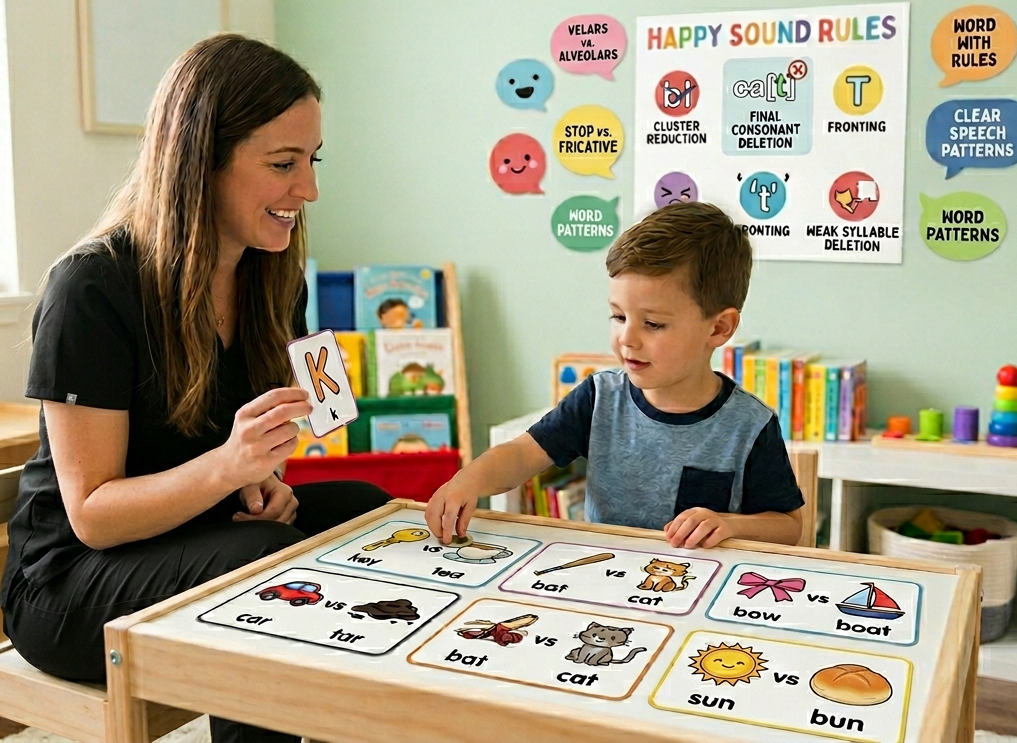
Phonology
Sometimes, a child’s speech isn’t just missing a sound here or there; instead, they are consistently substituting or leaving out whole categories of sounds. If your child’s speech is very difficult for unfamiliar listeners to understand, or if they seem to simplify words in a predictable pattern (like leaving off the ends of all words), they may be experiencing a phonological disorder. Therapy helps children learn the "rules" of the speech sound system.
-

Pragmatics
Having a robust vocabulary and perfect grammar is only half the battle. The other half is knowing how to use language socially to build relationships, share experiences, and navigate the world. It is the unwritten social rules of communication.
Children who struggle with pragmatics often find it difficult to connect with peers, misinterpret social situations, or may be viewed by others as "socially awkward" or disruptive, even though they have a strong command of words.
-
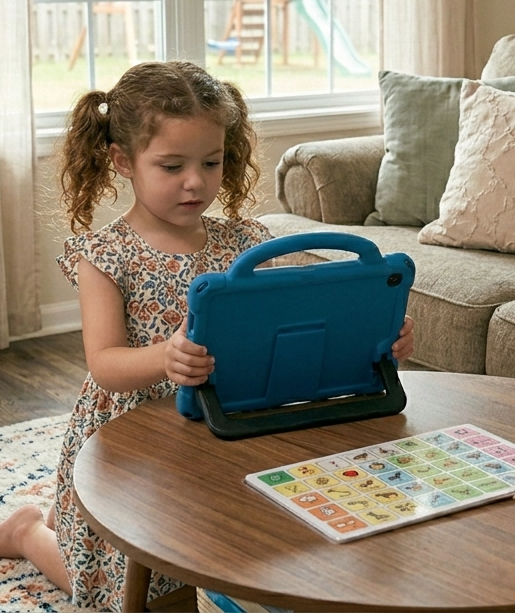
AAC
We believe that every child deserves a voice. For children who are non-speaking, minimally verbal, or whose speech is highly unclear, we specialize in AAC. We evaluate, implement, and train families on a variety of communication tools, including:
Unaided systems: Gestures, manual signs, and body movements.
Low-tech aided systems: Picture communication boards and core-word flipbooks.
High-tech aided systems: Specialized speech-generating devices and communication apps on tablets.
-
Fluency
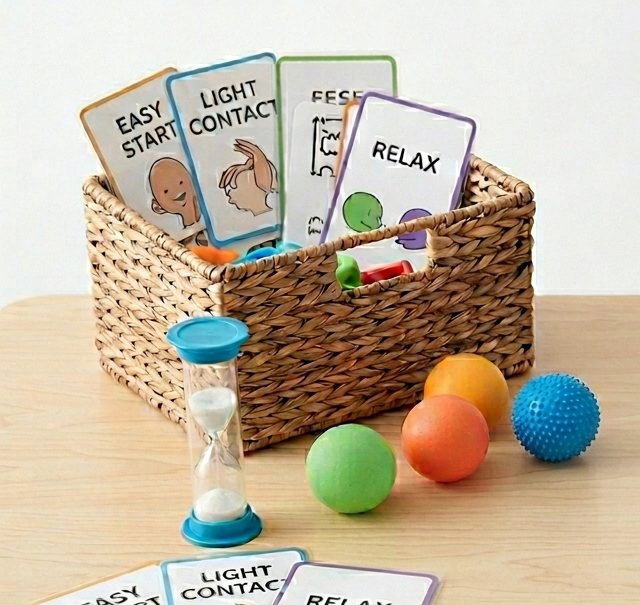
We all trip over our words from time to time. However, if your child frequently gets stuck on words, repeats sounds, or shows tension and frustration when trying to speak, they may be experiencing a speech fluency disorder, commonly known as stuttering.
We understand that stuttering impacts more than just a child's speech—it can affect their confidence, participation in class, and willingness to speak up. Our fluency therapy is designed to help children develop easier speech patterns while building a strong, resilient, and confident attitude toward communication.
-
Auditory Processing Difficulties
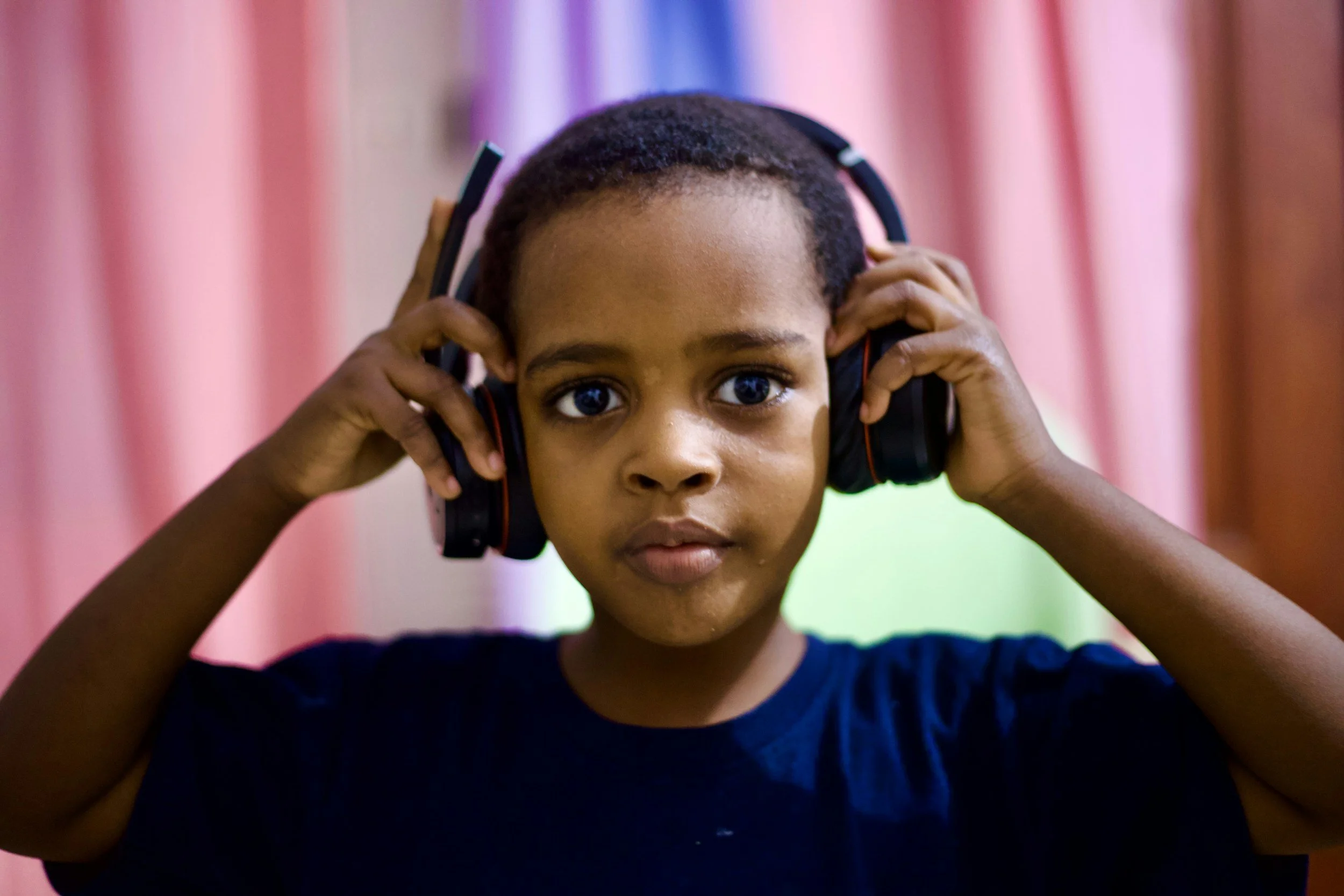
Does your child struggle to follow multi-step directions, easily get distracted by background noise, or frequently say "What?" or "Huh?"—even though they have passed standard hearing tests? They may be experiencing Auditory Processing Disorder (APD), sometimes called Central Auditory Processing Disorder (CAPD).
While an audiologist officially diagnoses APD, speech-language pathologists play a critical role in treating and managing the disorder. Our comprehensive approach relies on direct auditory training, compensatory strategies, and environmental modifications.
-

Frequently Asked Questions
Please visit our Frequently Asked Questions page to see more details about each of our service areas. If you have further questions, please feel free to click the button below to connect with us! Our team is happy to discuss your child's specific needs, clarify our clinical speech and language services, or help you figure out the next steps for your family.